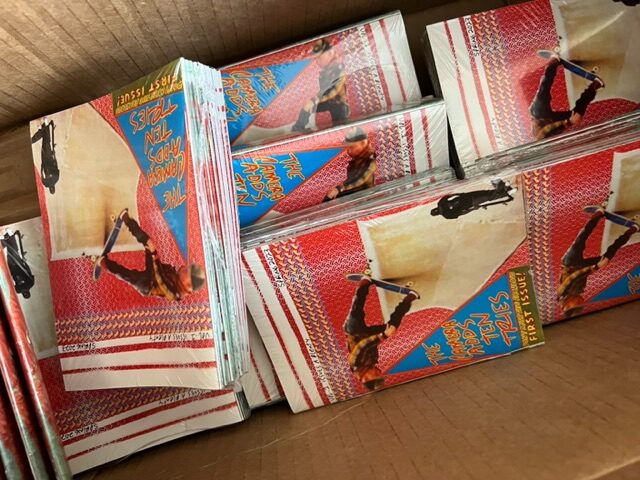
The Camera Adds Ten Tries skate zine is a new endeavor undertaken by myself with illustration work by artist Davey Highben of HiveMindHolyShroud. We’re both old-timers in the skateboarding world who wanted an outlet for our art, photography, writing, and hyping the Midwest skate scene (both skateboarding and roller skating). A second issue is in the works but you can still pick up issue 1 by contacting me at andrew@andrew-miller.com with your mailing address and request. Each zine is $5 and I’ll provide you with payment options.
I want to thank the Greater Columbus Arts Council linked here for an artist grant which has helped me to afford printing of these zines, purchase of film and development chemicals, as well as paying for the illustration work.
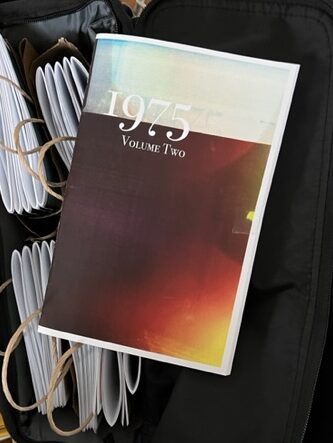
I’ve been lax on updating this website with new work so here’s me catching up on that! If you would like a copy of either this volume or the first volume of 1975, please contact me at andrew@andrew-miller.com with your mailing address and request. Each zine is $5 and I’ll provide you with payment options.
In 1975 Volume Two we’re talking sexual positivity through interviews, poetry, short stories, and photography.
I’m all out of the actual printed version – which is in fact pretty exciting since I made a print run of 50 zines! So, if you missed out, or if you would just like a chance to share something you read with friends here’s an online version for you to enjoy.
Preface
As a kid I believed in the story of the starving artist, of suffering for the craft, of all of that. I believed that if you do what you love you will never work a day in your life. I believed a lot of things that seemed self evident in my naïveté. These misguided beliefs led me to recognize what should have been obvious – that I was an idiot. Ever more obvious than my lack of intelligence, however, was the fact that an artist isn’t one dark, brooding, monolithic being. I was never able to figure out on my own that the only requirement to be an artist is the creation of art. I’ve spent decades learning that lesson from the many talented artists I’ve befriended over the years. This isn’t to suggest that being an artist isn’t a struggle – these interviews will confirm that it can be. I am fortunate for these people in my life, and as a small token of my fortune I’m presenting this collection of pieces about my friends, my fellow workers, and comrades with the hope that you, the reader, will find some sort of inspiration and connection to these artists too.
Skateboarding, Photography, Art, Music – it’s all Mental Health
Aaron Hobgood is a human I love. What follows is Hobgood in his own words from a conversation we had, sipping coffee and enjoying the lingering warmth from summer as fall began to settle in. Check him out @theblvcksiren on Instagram after you fall in love with him too.
AH: It’s kind of sweet just because it all stemmed from skateboarding. It started just hanging out with friends and skating around town, and filming stuff was cool, but I was always like, damn, everyone can film but we never have dope photos. So, I wondered how hard it actually could be to learn this. I said fuck it and spent like $200 on just like a regular camera.
Actually, one of my first photography mentors, one of my favorite photographers, Brad Hall, and I skated. That’s how I knew him, through skateboarding. So of course, when I picked up that camera, it was kind of like it was really cool to have somebody I could always talk to and ask dumb questions. His wife is an artist with a studio, and she’s really connected in the art scene. We’d sit around together, and he would just like kind of set things up and shoot, we’d shoot photos, and he kind of explained stuff to me, and we would go out skating, same thing. And it’s like, he’s shooting photos of everyone, but he’s explaining everything to me. At that point I thought, yeah, I can take skateboarding photos now. I know skateboarding well enough, right? Fuck it happened fast that I was capturing skateboarding exactly how I was seeing it. I knew photography wasn’t something I want to get bored with and I wanted to figure out other things to shoot.
Aaron Hobgood – “Skate Naked Skatepark”
Of course, I love people; well, I hate people, but I love capturing people in photos. So, it turned from there to, damn, I would really love to shoot portraits.
I didn’t know shit about composition or anything like that. That’s when I decided to shoot portraits the same way I shoot skateboarding. It worked and made sense to me, so I started shooting more portraits, and from there, that’s where my photos evolved into the weird stuff that I do now.
I’ve always been computer savvy because I’m in that generation, which is why editing photos was an easy thing for me. I used to edit photos I’d take, or find, back when I was in high school using Photoshop turning them into weird little collages. I didn’t really have knowledge about the software, I was just going in there and clicking things and seeing what they do. That was when I was like, oh wow, I can distort what I capture into whatever the hell I want. Now with my portraits and stuff I use that to make all of these weird distortions. All of my weird distortions and things like that are like a response to my experiences while on hallucinogenics.
The first time I did mushrooms, that’s kind of where it began, I started looking at things in a different way. What if you have a big head or long fingers for no reason, what if I gave them eight arms? I fell in love with all these possibilities. Oh, this is a beautiful photo, right? A beautiful person. Alright, how far can I take it to where it’s still beautiful, but also fucked up. And that idea turned into asking what else can I do now? At this point I’m on a computer all the time. I’m shooting photos all the time. I still don’t know all of the technical shit but I continue to believe I can figure it out. Part of that was that I knew I could take a technically sound photo. But if you asked me to explain why I did it that way I wouldn’t know. That’s why I wanted to have a deeper understanding of photography and it is what brought me to working at the camera store.
Aaron Hobgood – “Ali”
I’ve had various jobs that were okay, but they weren’t really anything that I cared about, which is another part of the reason why I started working at the camera store. But working at the camera store has taught me a lot about technique and about the cameras themselves, so it’s really nice to have a job that I’m excited to go to every day.
It’s weird to think about how everything I really like stemmed from skateboarding. Skateboarding as fed my entire life from when I picked up my first board, I have not put one down since. Skating opened up the world for me, it let me see all these different weird things that are all connected but also still their own separate things. Due to that, instead of being like, I gotta stay with this one thing, I was more like, let me just dabble in all these other cool things that I’m interested in. For example, I met a really nice guy back home in upstate New York who was a fucking drum and bass DJ. Being at my local skate shop all the time I would hear him in the office and I’d be like, what, what is that music? I was curious and wanted to know, so I would go and hang out with him. Doing that is what ultimately led me to start writing drum and bass and electronic music.
Skateboarders understand this, that frustration of trying something new and getting really close to doing it and, you’re having fun, right? Then there’s that point that hits where it’s less about fun and more about getting this shit done. I understand the trick or whatever, and I’m breaking it apart and rebuilding it in my head but can’t understand why the fuck is it not coming together. That’s one thing that skateboarding really drilled into my head, keep pushing until it comes together; and I’ve noticed that attitude transfers into all these other things. I’m grateful for it but at the same time, it’s like, it works me too. With photography, especially digital, I’ll shoot something and immediately look at it. And I’m like, that’s not quite it. And then it turns into shooting photos of the same fucking thing like twenty times before I get the one that is exactly how I envisioned it.
Aaron Hobgood – Untitled
These creative projects, and skateboarding is part of that, push me to want to be challenged a little bit more and a bit more. They push me into learning all these other things because I just know, I’m like, at, at the very base of everything, I can fucking do it. I just need to have the mental strength to stick it out beginning to end, right? Because once I get to that end part, I feel so good, like fuck, yeah! When you really care about something like that, you’re gonna love it, you’ll have fun, and then it’ll start to bug you. Do or die, I feel like I need to fucking do this. I need to experiment and try new things to break past this wall and get comfortable with all the different things.
People are afraid to try something new because they don’t want to fail; but that is all skateboarding is, failing over and over. You suck at everything until until you you figure it out. And then one day you realize, Okay, I’m good at this. Constantly I feel like, alright, cool, what am I gonna suck at this week that I’ll be better at in a month, or year, or whatever? Sometimes being this way is annoying as all hell, especially when I think I’m trying very simple stuff that there’s no reason I should get frustrated; but I need that frustration to push me over my fear to learn the new thing and lock it in. So yeah, skateboarding really gave me a permanent drive of like, get frustrated, but then push through and succeed.
I’ve only really been shooting photos for like four and a half years now. I bought my first camera, and then within a year, I was doing paid work. I came to this realization the other day. As a black man in America, I always went so hard at everything I did because in my subconscious, I was telling myself I have to be the best, because no matter what, there are going to be people that view you as nothing just because of this skin. In skateboarding or shooting photos I was trying to really push myself and set myself apart not for me, but because no matter what, inside myself I felt I was always being viewed as a lower tier because of the color of my skin. I didn’t want to be categorized like that and I thought I had to go hard, skate different, be the best, and people will pay attention; not like, hey Aaron, just have fun. Since realizing this inner struggle though it’s become more and more about, man who gives a fuck what anyone thinks. I learned that I can let those voices define me and control the direction I take with my life or I can fucking enjoy myself and do what I love and do it how I want to do it, rather than how I think I need to do it to be set apart from everyone else, right? And that’s something I stress to the kids who take skate lessons from me, no matter what race they are.
No matter what, just have fun, you don’t have to be the best and you don’t have to be different. Just do what you enjoy, that’s all that’s gonna matter. Find your tribe, you’ll find the people that really love what you’re doing, because you’re doing it for you. That lesson took most of my life to figure out. I thought I had to have my hand in all these pots, I got to do all these cool things, I got to be so multifaceted. Because just being good at one thing doesn’t matter. Because no matter what, there’s going to always be people in the world that view me as lesser, no matter how good I am at something, and I can’t control what other people think, or what they feel, or what brought them to that point. All I can control is how I fucking feel.
I’m 31 now, and not to make it about race, but most black families don’t really talk about anxiety or depression, or really any type of mental health, that’s not really a thing that’s talked about or anything like that. And that’s why I didn’t figure out something was going on with me until I was maybe 24. I’d already been living away from home for six years when I really had my first realization that something’s wrong and I can’t just get over it. After that I was diagnosed with severe anxiety and depression which was such a weird thing for me. That made it possible to talk to my mom about it though, and during our conversations I found out she’s been in this same place but was even older before she caught on to it. For me, especially working with kids and all that stuff, I try to be very outspoken about it, even to younger kids. Cuz, I mean, the earlier you understand or even just know what you’re feeling the better chance you have of working through it and finding help like therapy and medication that may work for you or whatever. Knowing about mental health issues gives you more of a fighting chance. And that’s not to say that I didn’t have a fighting chance, it was just a bit more of an uphill battle at the very beginning, because I was already so far in life. And, not to go back to skateboarding, but it was just like, fuck, another huge barrier I got to get past right. Rather than, like, if I had known earlier, I could have built the routines for the healthy things that could help me get over the hurdles, rather than it being a big fucking wall that I got to break through, and kind of work on maintaining.
Aaron Hobgood – “Self Portrait”
There are so many people out there who are at that same place that I was being like, oh shit, there’s something wrong with me. I didn’t truly know how many people there were in the skateboarding and the arts communities that suffered from the same anxiety and depression that I did until I actually got really involved with them. And then I was like, holy fuck, we’re all sad. Realizing that led me to using art as one of my ways of working through everything, like my own therapy. Art and skateboarding became even more important to me as things I really cared about. That led me to realize that, if I care so much about these things, and these are things that make me feel good, I should care enough to heal. I don’t have to let this kill me, and that’s why I’ve become more and more outspoken about it over the years, especially on social media.
You know, it’s so easy to fall into the trope of all the bullshit and nonsense, and to get distracted from your life, especially on social media and all that. I got to the point where I was like, I don’t want to fucking be distracted, I want help, I want to get better. I want to show people like, yo, there’s nothing wrong with you for wanting to get help. Right? And not only that, but there’s somebody in the community that you see all the time, who’s going through the same shit. And he’s not afraid to talk about it, he’s never gonna judge you. You can talk to him. And he’s always going to encourage you to heal. Maybe just me saying something can help turn them around. I also know on days I feel like shit, if I can make someone feel a little bit all right, just a little better about everything, that’ll make me feel a little bit better too. So yeah, sometimes the demons get to me, and I don’t want to take photos, or do art, or even skateboard. But then I’m like, nope, that’s the cure for me right now. Art and skateboarding are the cure, and I deserve that.
Skateboarding and photography have a lot of similar aspects to them mentally. I’ll go from a photoshoot straight to the skatepark, and vice versa. And no matter what my warmup is basically like, I have to actually think like, what do I want to skate? Skateboarding and photography, it’s the same I swear, it’s like a slightly different part of the brain that looks at things completely differently. Instead of just rolling around or taking pictures, you’re taking time to look at everything with like a different set of eyes. I think that’s true of everyone under the same umbrella of being a creative. Your brain kind of rewires to become familiar with that thing you’re looking for until you start to see it everywhere. Like, you can’t go from, oh that would be a sweet ledge to, oh, this would be an interesting photo, it doesn’t happen right away. It takes a minute, your brain has to cool down and come up to the other side. Once that happens, it never goes away; like an itch, sometimes you don’t necessarily see something, but your brain draws you into it. Subconsciously it recognizes different pieces of the puzzle that you’re always trying to put together and it’s fucking bizarre. I swear being an artist, being a skateboarder, being a photographer, it mutates your brain slightly to see and do different shit. Rather than, you know, kind of just existing, you become so much more observant.
Aaron Hobgood – “Float”
The Industrial Workers of the World Poet and Poster Artist Carlos Cortez
The IWW has a long tradition of appealing to working class artisans and there’s no better example of that than Carlos Cortez. During Cortez’ life he created many iconic posters memorializing the struggles of fellow workers as well as through his poetry, songs, and contributions to IWW publications like The Industrial Worker. The culmination of his life’s work is being celebrated by the Chicago Literary Hall of Fame where he has been officially inducted on September 19, 2021.
Cortez was born into the struggle. His father, Alfredo Cortez, was an indigenous Mexican of the Yaqui from the Sinaloa region. Alfredo Cortez fought in the free speech riots in San Diego in the early 20thcentury, ultimately serving as an organizer for the IWW. His mother, Augusta Ungerecht, was a German immigrant working as a socialist party organizer and poet when the two met at a socialist party convention in Minnesota. By 1923 Cortez was born and the family lived in a largely immigrant section of south Milwaukee.
As an only child, Cortez spent a lot of time watching his parents organize within their community, this helped instill in him a class consciousness at an early age. In grade school he learned to turn his drawings into wood and linoleum cut blocks, allowing him to print as many copies as he liked. As he grew, Cortez learned multiple languages from his neighbors, along with the struggles they faced as poor immigrants.
Carlos Cortez – “La sonrisa”
There is a long history of Mexican artists using wood block printing to spread political messages and Cortez was keen to join those ranks. By the time World War II had rolled around Cortez had made up his mind that there was no nation worth fighting for, only the working-class struggle. As his mother was devoutly pacifist and neither of his parents believed that the war would benefit the international working class, Cortez chose to become a conscientious objector.
At a time when nationalism was running high in the United States, Cortez’ decision landed him in federal prison for two years.
According to his close friend and confidant, poet Carlos Cumpian said, “The conscious expression of his writing and art prior to being in prison was not yet radical, but he had time to read in prison and formulate his own philosophy that led to the bigger internationalism. [Cortez] really found his politics in prison where he had nothing but time to read and talk about international struggles with other prisoners, many of whom objected to the war for religious beliefs.”
Although Cortez and his family were friends with Dorthy Day (of The Catholic Worker), he himself was not religious. His working-class perspective made him question what the churches were doing with their wealth, and even as a pacifist, Cortez believed the Spanish Civil War was necessary to protect the Spanish workers from abuses by the church and fascist state.
“Cortez felt war was generally orchestrated by the rich and he never wanted to fight other workers. He would’ve gone to Germany to kill Hitler, but he wasn’t going to go and kill other working-class people,” Cumpian said. “He came out of prison, and he was shunned by his so-called friends. His dad and relatives accepted what he did, but he still felt like an odd guy out.”
Carlos Cortez – “Ricardo Flores”
After prison Cortez joined the IWW and found his niche for agitation through art and writing. In these post-prison years, he began dating a Japanese American woman, whose stories of abuse during the war years further radicalized him. It was this woman who introduced him to the haiku form. Cortez was drawn to highly accessible poetry in the same way he was drawn to making easily reproduced art. As an outsider, he was drawn to the beat poets of the time, particularly Kenneth Patchen, for their exploration of non-conformity. Even in short form, Cortez focused on narrative poetry, telling the stories of the daily lives of working people. Eventually these narratives became part of his long-standing Industrial Worker column titled “The Left Side.”
While Cortez never made a living from his writing or art, he certainly left behind a legacy that far overshadowed his life as a wage slave. Cortez’ woodcuts and linoleum cuts were left to the Mexican American Museum of Art with the explicit responsibility of reprinting any of Cortez’ work that becomes too expensive for a worker to afford.
Carlos Cortez – “Joe Hill”
One of those prints, of Joe Hill, remained on the wall of his Chicago apartment until his death in 2005. Cortez loved music and was fond of rebel songs but had a particular soft spot for the blues. Although he wasn’t a musician himself, he does have song writing credits in the IWW Little Red Songbook for “Out of Work Blues.”
Working at the Topping and Co. International House, prior to leaving Milwaukee for Chicago, is where Cortez met several musicians and ultimately meet his wife Marianna, the sister of Niko Topitzes (Nick Topping). For the sake of work and his love of music, Cortez and his wife moved to Chicago, near DePaul University at 2117 N. Clifton Ave.
In Chicago Cortez continued to work various factory jobs, salting in at some and organizing others outright. Around 1970 was when Cortez and Cumpian became friends after a chance meeting in the apartment building that led to Cortez signing Cumpian up for his red card.
“He invited me to go and hang out with him and his fellow workers, listening to music and such,” Cumpian said. “Eventually the FW’s let me know about a job and a bunch of us signed up – the place made lava lamps and blacklights and distributed them – this ended up being my first strike. We would get locked into the building during shifts, the dock workers were the only ones that could come and go. They did this to prevent theft. Working there was the first time I ever saw a dead person, there was a man frozen to death in our doorway. We were forced to eat our lunch on our workspace. There was nothing like a medical kit or anything. So, we definitely wanted to organize the shop.
“[Cortez] helped lead it. We were able to get the truckers to respect our picket and we won. He always made sure his circle of friends were all on board with protesting and being public about it, marching with signs and other materials.”
Probably the most famous story about Cortez’ direct action was when he worked at what he called “the bubble factory”, a soap manufacturing plant near his apartment. During a winter storm that prevented the supervisors and managers from getting to the factory from their suburban homes, Cortez and his fellow workers went in to work and ran the production line all day on their own. When asked by management how they did it, Cortez explained that it was easy, and much more productive than if the bosses had been there.
Cumpian said he believes Cortez is being honored because Chicago is a union town, and Cortez understood that intimately.
“Cortez was one of the few contemporary writers who wrote about unions, immigrants, and workers of all kinds,” Cumpian said. “He put together ‘Working People’ and ‘Two December Songs’ that tackled the topics of immigration and the working life. ‘Requiem for a Street’ is probably his poem that ties him most to Chicago. It’s a narrative poem and brings about the harmony of Maxwell Street, the shopping district of the poor. This wasn’t just a place for the poor to go to shop, but there were corner performances like blues music, and it was a place where immigrants would find others speaking their native languages. This was before the mall-a-fication of everything. His poems about police brutality and protest put him squarely in the awareness of working-class Chicago; in both English and Spanish.”
Cortez would sign his work differently based on topic or audience as well. Sometimes as Cortez, sometimes as Red Cloud, sometimes in Spanish, and sometimes with only his X number: x321826.
Carlos Cortez – “Lucy Parsons”
Don Evans, director of the Chicago Literary Hall of Fame, said that while “the poetry was the first and foremost consideration, the selection committee did consider his whole body of work. So not only did he publish significant poetry, but it was connected to his lifelong mission of supporting workers, worker rights, artists, and relentless pursuit of social justice. [Carlos Cumpian] really has done everything he can to help keep the work of Cortez circulating. The poetry landscape is very unforgiving and so having someone like Cumpian grind away for years is a gift.”
According to Evans, one of primary reasons behind Cortez’ induction is that the committee asked, “what was his resonance? We looked out into the future and felt Cortez’ work will continue to resonate for years to come.”
“There’s a kind of texture to his poems,” Evans said. “What I respond to is the feeling you get that you’re inside his world and you feel it is much different than the world you’ve had described to you. Cortez’ world is a rigged world and for Cortez there’s such passion and intelligence but also it’s more than a vision, you can feel how much ownership he had in this world he’s sharing with you. This is not an idyllic world, which is why he worked so hard to make more just, to fight for justice.”
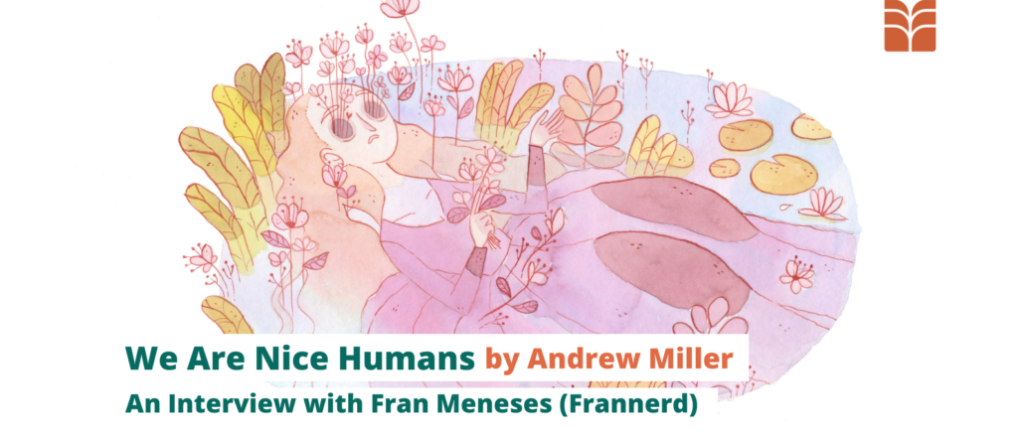
FRANNERD – Feminist Chilean Illustrator Fran Meneses
Illustration is a language not held in by borders or history. Chilean artist Fran Meneses embodies this spirit personally as well as professionally through the work she’s been creating over the past decade; all the while drawing in a global audience who appreciate what her art has to say about the world we live in today.
Meneses uses the moniker Frannerd for her signature and social media accounts that have allowed her to flourish in otherwise difficult financial times, particularly for artists.
“I always saw comics, illustration, and graphic novels as something you did on the side; because, in Chile I didn’t know anyone who did this for a living,” Meneses said during our interview. “So, I enrolled in Graphic Design at Universidad Diego Portales in Santiago. I thought it was a good mix of drawing and creativity. But by 2009 I started seeing more and more people doing illustration online and I wanted to do that too.”
Fran Meneses self portrait of sketchbook
At university, Meneses continued making small comic illustrations, honing her craft for capturing everyday life while still assuming that this would be something she could do for fun while earning a living as a graphic designer for a publisher or agency. Eventually, she began taking on small commissions from friends, which lead to an opportunity to create illustrations for the free paper at university.
“There was a Latina feminist blog that was written by women-for-women, and I really liked it, but they used crappy stock photos and such. I was a huge fan of the site and I wanted to make it better, so I pitched myself to them and they took me on,” Meneses said. “Doing these illustrations meant that I had to learn and develop my style. Even though I wasn’t getting paid, that started attracting more attention to my personal blog. Eventually people started asking me to do small paid work for them as well.
“I was trying to be realistic about this working out as a way to make a living in Chile and didn’t really believe it could.”
In 2013 Meneses and her then husband, musician and playwright Eduardo Pavez Goye, moved to Berlin Germany.
“I like the autobiographical approach to peoples work, that’s what I am interested in. I had trouble finding Chilean inspirations of this, which was disappointing,” Meneses said. “I was really influenced by women illustrators from Europe. I have a hard time putting words to my visual style because I don’t think it has a specific name. Conceptually, I think my work comes from a deep state of vulnerability and stripping myself to show my experiences and my thoughts and emotions. I think my duty as an artist is to get as personal and dig as deep as I can when I publish something.”
Fran Meneses – “Ophelia”
This vulnerability is displayed in all of Meneses work, though no more so than through her first full length graphic novel Personas Favoritas [2017 SM Ediciones, Chile], coauthored with Pavez Goye, which tackles the difficulties of adult friendships and how those friendships sometimes falter.
“I had a terrible friend breakup as an adult, and I noticed how many other friends of mine were struggling similarly. That was when I realized there weren’t really any books for adults about friendship type relationships. I wanted to discuss how hard it is to make friends as an adult, and what I realized after interviewing therapists and friends around the world, we as adults carry so much emotional baggage,” Meneses said. “So, it comes back to being vulnerable. This was a very enlightening process for me.”
The couple created a podcast for some of these interviews and to work through their own thoughts around this issue while putting the book together. This multidisciplinary approach to her art has allowed Meneses to continue growing creatively, experimenting with different ideas in various public ways and putting that back into her work. Besides the podcast, Meneses has a significant following on YouTube, Instagram, and now through Patreon.
“Ultimately, living abroad and having the internet has allowed me to open an online store, and start to use things like Patreon that I couldn’t do in Chile due to the postal system being unreliable and other issues there. By expanding my income through the internet, it has given me the freedom to turn down client work and just do the work I want to do,” Meneses said. “Not only that, but also, when I moved to Berlin, I felt very lonely and had a hard time connecting with artist scene because of the language barrier. The internet let me connect with people going through that same feeling of inadequacy and sense of wanting to belong. This was a really difficult time for me, but also it helped me to find a sense of purpose.”
From Berlin, the couple moved to London, England and then down to the coast in Hastings which is where Meneses was finally able to really support herself on her art alone.
“I think I’m more proud of my identity as a Chilean artist after moving around the world. It is very hard for someone to thrive as an artist in Chile, and I was afraid of how having an accent would cause me problems outside of Chile. I grew up with a lot of shame around my work and self because Chile is so far away and is very isolated,” Meneses said. “My upbringing was so different from a lot of people that I’ve met through all of this moving, and that helps make me recognize what I have been through. Additionally, there is so much resilience you build up from moving. Now it is the moving so much that has become the issue, not the cultural differences.
“When I go to Chile it is familiar, but it isn’t my home anymore. It is like the Theodor Adorno quote: ‘for a man who no longer has a homeland, writing becomes a place to live.’ Instead of writing though, my home is my illustrations. Having been through all fo this moving I’m proud to be Chilean and I can see my accent is endearing to others not a failure.”
After Pavez Goye was accepted into Columbia University’s Ph.D. Program, the couple moved once again; settling in Brooklyn, New York.
“I have since taken on a bit more of an American style. Part of what I do and what I love about the stuff I’m doing is the mix of something funny, weird and nerdy,” Meneses said. “In both cases, Europe and America, what I love is how simple yet expressive they are with their illustrations, and how they were talking about their own lives in their work. I wanted to make people feel similarly when they saw my work. I like how unapologetic the work is about making mistakes and talking about mental health and pain and depression.”
According to Meneses, author of Daring Greatly, Brene Brown, was another inspiration in this regard.
“I remember how reading these stories [in Daring Greatly] and investigations of shame and vulnerability was what connected me to the artists and musicians that I like. When I started doing my work, I noticed that not a lot of people were doing this with content creation at the time,” Meneses said.
Through her many social media accounts, Meneses hosts live drawing sessions with her audience and interacts regularly with her growing fan base, inspiring new illustrators as well as helping to open the door to some difficult conversations about contemporary womanhood, immigration, surviving an ongoing pandemic, and now coming out lesbian as an adult.
Fran Meneses – excerpt from “The Ugly Sketchbook”
“Social media provides instant response and gratification which makes me more impatient about large projects because you have to work for so long and you can’t show people what you’re doing, and that is unnerving,” Meneses said. “As an author and artist, you have to not disappear for too long but still you must have time for long term projects. If you do this work isolated in a cave, then when you return no one knows who you are anymore.
“The model of artistry where you just come out from a cabin with some piece of work and that supports you doesn’t work anymore because we’re linking the art and the artist so much now. We all want to be part of the process, so as an artist you can’t disappear from the public. It’s interesting how this model has changed, there’s no longer art separate from the artist. Being an artist now is like being a public figure and I think the biggest flaw of some artists is to be indifferent to what’s happening in the world.”
As a Latina, a Chilean, an immigrant, feminist, and lesbian; Meneses has lived life under the patriarchal dictatorship of Pinochet, watched as family members struggle to make ends meet under widening wealth gaps, and recently witnessed the manifestations in her native country that have led to the rewriting of the Chilean constitution. All of these factors play into how she expresses herself.
“I open my chest every time I make some art or content, it is impossible to separate myself and my work. I think with time you gain experience about what you can share and what you shouldn’t share, I think there’s a fine line between being vulnerable and sharing things you shouldn’t,” Meneses said. “I don’t think it is required to share all of your life to be an artist, but we do want to connect and so that means sharing, and that makes you open to criticism. A positive of being open this way though is that it requires me to educate myself about political issues and being informed.”
Interestingly, despite so much struggle, Meneses’ creative endeavors are all the more powerful due to the hope and bravery expressed within them.
“What attracted me to illustration was the power that came from being able to communicate through visual language. I’ve always considered myself not as talented at writing, so I have always been drawn to the visual medium. This is what was captivating to me, and like so many kids, I loved drawing – I just never stopped. I saw people having fun reading my silly comics and so I wanted to keep people feeling that way,” Meneses said. “As I grew up though I realized a lack of representation of women and that was the opening to let me explore the topic in my art. The power of visual art is in how universal it is – people see the picture first and then they understand – they don’t need to spend time processing words.”
Fran Meneses – excerpt from “The Ugly Sketchbook”
Meneses describes her process as one of people watching at its most basic, but explicitly as a way of capturing the relationship humans have to their surroundings. She expresses this through her Instagram comics which often are derived from internal monologues between her and her cat, her zines tackling issues of self-consciousness, and her travelogues including the full-length graphic novel About to Leave. Recently Meneses has started a project called The Ugly Sketchbook Tour where she shares all of the rough illustrations she has made without self-editing or censorship.
“I’m fascinated by people and the way I process life is through my eyes, through drawing, and part of what I’m doing with my ugly sketchbook is to become more forgiving of my mistakes, to accept my mistakes,” Meneses said. “In that way I think I’m also digesting the things I love about people in a visual way. It’s what helps me make sense of my surroundings.”
Meneses has undertaken yet another graphic novel project with Pavez Goye, who remains a close confidant and creative partner, with the goal of completing it in the next year and finding a publisher to release it shortly thereafter. The new project is based on a science fiction manuscript Pavez Goye wrote, which presented another creative challenge to illustrate technologies, architectures, and landscapes that fall outside of Meneses core comfort zone.
Watching her social media accounts where she posts snippets of this work makes it difficult to believe she is challenged by the project. Following along with her creative process is inspirational. You can follow her creative endeavors at @Frannerd on Instagram, YouTube, and Patreon, or via WeAreNiceHumans.com.
The Last Soviet Artist – Victoria Lomasko – Other Russias
Introduction:The subjects of Victoria Lomasko’s graphic reportage are what she has called her heroes, regardless of what side of an issue they stand. In approaching work this way, she finds a way of representing the voices that connect ordinary people to one-another, as well as highlighting those moments where an individual’s actions and actual life may be in discord. During a lecture at the Chautauqua Institute, Lomasko stated that, “the majority of citizens in Russia continue to be invisible because we don’t have a voice in public space, and we know nothing about our rights … for me it’s interesting to collect in one series people with opposite political opinions. I draw ordinary participants, not leaders of famous politicians.
“I think a lot about modern alternative forms of journalism … I follow my heroes for a long time and share fragments of their stories … the idea is to make heroes closer to readers, so that readers start to care and help.”
For Lomasko, the foundation of her graphic reportage is not found in her western contemporaries such as Joe Sacco, but in the art of 19th and early 20th century “artist-correspondents”. She has specifically pointed to early Soviet artists who captured moments from the revolution and important battles, such as the siege of Leningrad.
“Graphic sketches are a genre that require minimal budget. For example, many graphics were made during the blockade of Leningrad … the artists were witnesses to the extreme hardships … [I] need to feel the rhythm of an event and express it immediately in a drawing … In comics, the compositions of all frames on a page are interdependent, so you can’t insert reportorial sketches.”
Born in 1978, near the end of the Soviet era, Lomasko followed her father’s wishes for her to become an artist. She was raised in the small historic city of Serpukhov, Russia, where her father designed propaganda posters and her mother worked in a print shop. Growing up just 100km south of Moscow, Lomasko said she rarely made it out of Serpukhov in her youth.
As an adult however, she has experienced far more of the world than most people, creating graphic accounts of important social events throughout many ex-Soviet countries, European countries, and the United States. It was during one of these trips that I had the good fortune of meeting her at the Chautauqua Institute, in western New York. Lomasko was invited there in support of her latest collection of graphic reportage, the book Other Russias (n+1 2017), which won the 2017 Pushkin House Prize for Best Book in Translation. Other Russias was also named as a 2018 Chautauqua Literary and Scientific Circle (CLSC) Reading List Selection.
Most recently, Lomasko was the focus of an autobiographic film titled The Last Soviet Artist, directed by Geraint Rhys, which is available on YouTube.com. Additionally, her Instagram is @victorialomasko where she posts both art and scenes of daily life. Below is our conversation.
Andrew Miller:During your lecture, you said you began this work counter to the liberal intelligentsia of the time. As you put it, “social problems weren’t interesting to them and weren’t being shown in contemporary art.” In your graphic reporting you specifically choose to show people struggling for their rights, does this make you an activist, or do you remain just an observer?
Victoria Lomasko: I do not like being called an activist. I am sure that the term and the concept of activism were created to sell the results of various social activities. Across history there have been people interested not only in their private life but also in something outside of it; trying to influence what they were passionate or concerned about. Nobody calls artists such as Diego Rivera, David Siqueiros, or Käthe Kollwitz “activists”. In their art there were political and social topics. Like them, I am an artist, not an activist; I do not belong to any special interest groups.
AM: There has been some reporting about your brief time taking courses at the Institute of Problems of Contemporary Art in Russia, now called the Moscow Institute of Contemporary Art. According to several articles you didn’t feel as though you fit in, because the institute was obsessed with conceptual art and eschewed social realism. With that in mind, other than the three you just mentioned, what artists are you most influenced by?
VL:I’m not impressed with the conceptual, modern, plastic paintings which have no plot to them. I’m attracted to when the artist is at the junction of a historical situation, and they were able to depict these changes, find new images for new heroes, create a new iconography. David Siqueiros works are so out of this world that it’s unclear how to learn from him, I just admire him. Some of my graphic decisions were learned from the German artist Georg Grosz. Of course, Russian artists are extremely important to me, who, despite their high professional level, are almost unknown in foreign countries. It is unlikely that you will know anything by the names of Kuzma Petrov-Vodkin, Alexander Deineka, Pavel Kuznetsov. Petrov-Vodkin and Deineka drew primarily on the theme of the Great October Socialist Revolution, creating the first images of Soviet people. And Kuznetsov, the “Russian Gauguin”, worked in the Russian colonies in Turkestan. I may be critical of his subject matter, but the work itself is very beautiful.
AM:I believe your father was also an artist, you have said that he spent his workdays drawing hundreds of Lennons, but also that he painted on his own time; is that why you became interested in art?
VL: My father worked as an artist at the secret Serpukhov metallist plant[1] where he did the design and artwork for Soviet posters. And for himself in his spare time, his father painted landscapes with views of the ruining Serpukhov churches. It’s funny that he was sure that the churches would completely collapse and remain only in his paintings, but now in our city most of the Soviet plants have turned into ruins, while the churches are perfectly restored – a good example of how the political system and ideology changed.
My father, even before my birth, firmly decided that his child would be an artist. If I had brothers and sisters, he would have made them artists too. Perhaps if not for his pressure, I would have become a poet or writer.
Our apartment was always littered with paintings by my father and other artists, and I was irritated by all these canvases. Paintings are an object that must be displayed, or else stored away, and I was more interested in developing a clear message from a story, or idea, that could be easily shared.
AM:In other interviews you’ve mentioned being tired of Moscow and considered living someplace else. Are you still living and working in Moscow? Have you gone back to Serpukhov?
VL:A few years ago, I felt tired of Moscow, and I tried harder to work primarily in the post-Soviet countries: Georgia, Armenia, and Kyrgyzstan. It is interesting to me that my love for Moscow returned after trips to America. My first award for my work included a trip to New York, I won for my courtroom drawings[2].
After spending time in New York, I no longer perceive Moscow as a tough metropolis. Rather, I think of it as a pretty Asian city, comfortable, like well-worn house slippers. I think that Moscow is the only city in Russia I would choose to live in now.
Unfortunately, in 2017, a huge project called “the renovation” launched in Moscow. The plan was to demolish more than 5,000 five-story houses and move the residents to new high-rise buildings. My house, fortunately, did not end up being part of this program. I say this because I thought it might be, apparently, the new houses are of terrible quality and in bad areas. After the rallies of 2017 against “the renovation” project in Moscow, there are no notable social movements I’m currently following.
Victoria Lomasko –“Against” Graphic reportage from “the renovation” rallies of 2017.
VL: I’m interested in drawing how ordinary citizens learn to defend their rights and try to unite; but to paint something purely political, for example, the presidential election of 2018, does not appeal to me at all.
I do return to Serpukhov every few months.
AM:Given the fact you followed in your father’s footsteps, have you and your father worked together on any projects? Also, you’ve said that your mother worked at a print house in Serpukhov, how has that impacted your work?
VL:My father and I have different views on life and art, we work in different genres and techniques, so I can’t imagine how we could do joint projects. But I used an image of him, posed as the Soviet artist creating some of his works as part of the fresco, “The Daughter of an Artist Decorator”, which I made for an exhibition in Manchester.
Victoria Lomasko – “The Daughter of an Artist Decorator” Originally created for the 2017 exhibition The Return of Memory at the HOME gallery in Manchester, England. Lomasko is depicted on the right, her sketchbook opened with a pencil in hand, her father, Valentin, is depicted in the center and left, capturing his official artistic capacity – seemingly more directly related to Lomasko’s graphic reportage – instead of his passion for landscapes.
VL:My mother studied at the Moscow State University of Printing Arts as a typographer and worked all her life in the Serpukhov Print House. The print house, which has been completely preserved in its appearance since the Soviet era, was closed only last year. I managed to sketch the final days of this enterprise in operation.
I also studied at the Moscow State University of Printing Arts, where I learned to make art books, so I can say I got a synthesis of parental creative strategies. Since childhood, I was drawn not to painting, but books. I was interested in the synthesis of images and text.
AM:Did you learn to be a journalist while at university?
VL:I have no formal literary or journalistic education. I wrote quite a lot in childhood and adolescence, but, determined that I would enter the art department, I abandoned writing. It was very difficult for me to start writing again. My first book, Forbidden Art, I co-authored with artist-journalist Anton Nikolayev, who wrote most of the texts.
The book Other Russias begins each series of graphics with text meant to serve only as short commentary to the images. To understand how to develop my reportage into a book, I read journalist Masha Gessen’s book, From Life: A Manual on Social Journalism. It’s funny, I got to know Gessen not in Moscow, but only now in Chautauqua[3]. This gave me a chance to compliment her on her book. Over time, I became more confident with my work, then winning the opportunity to study post-Soviet countries for the “Trans-border Journalism” project, participating in it along with professional journalists.
Victoria Lomasko – “Pittsburgh” Completed during the Other Russias book tour, while hosting a solo exhibition in Pittsburgh, PA.
VL:During this American tour with Other Russias, I have on many occasions recalled Soviet caricatures about the “cruel grin of capitalism”, such as when I was drawing a graphic reportage in Pittsburgh, in an area where primarily African Americans live. I was also struck by the huge number of beggars and homeless in New York City, and how many of these people talk to themselves – they have gone mad, unable to fit into society. People in America, in my opinion, either become very adult and independent, or quickly degrade.
Soviet people by and large remained at a level of adolescence – the state controlled all spheres of their life and provided basic needs: free housing, medicine and education. Today, there is almost nothing left of the Soviet way of life, people have learned to survive on their own. In Russian society, this has caused a huge social stratification. And instead of communist ideology – patriotism, Orthodoxy and nationalism has taken its place.
AM:During your CLSC lecture, you spoke about the relationship between your drawings and the text. You said, “sometimes I see the ideal image, both visually and in social context; I need only pick them up and place them on my paper. At once I understand these are strong images.” Whereas in other cases the image is subordinate to the text. So, when you include quotations, do you try to capture direct quotes, or do you summarize, or is it something else?
VL:The idea of including dialogues in the reporting came from my reading of New Journalism by Tom Wolfe; along with some other books on journalism. Unfortunately, I can only capture a couple of the characters’ phrases, but I would like to be able to record and include interesting whole dialogues.
AM:Although you prefer not to be called an activist, in your lecture you mentioned working with activists and other human rights organizations. It is also factual that you’ve had difficulties in the past overcoming censorship of your work, including Other Russias, which itself has not been printed for the Russian market. As an outside observer, it feels natural that this would be an issue for you given how much of your work shows how ordinary citizens struggle to express themselves freely. When focusing on both marginalized groups and closed groups, you not only capture more liberal or leftist characters, such as Russian LGBTQ+ communities; but you’ve also captured Orthodox activists and youth serving time in detention facilities. How do you see yourself in this narrative? Do you have to confront your own ideals to do this work? Are you ever surprised by the viewpoints of your heroes?
VL:In recent years, I rarely show up and receive orders for my work at home in Russia, but I have many offers from abroad – Germany, England, the United States – so there is no need to complain.
Victoria Lomasko – “Kapitalina Ivanovna”
VL: Russian audiences always laugh nervously – for example, when I show the portrait of Kapitalina, who I met at the communist demonstration celebrating the anniversary of the Great October Socialist Revolution, she told me she prayed all night to God that the rain wouldn’t destroy her handmade icon of Lenin, Engels and Marx.
In Russia, it is difficult to be surprised at any combination of political views. You can meet ardent communists, such as Kapitalina Ivanovna from my drawing, who prays to God that the rain does not spoil her icon of Lenin, Engels and Marx. Likewise, many who hate Putin at the same time say they adore Stalin. Some of the liberals and leftists unexpectedly supported the annexation of Crimea to Russia. Sometimes it is positive though. I remember how, during the occupation of the camp of Abai Abai, the left organized a library, lectures, theatrical performances, while the hardened nationalists guarded the camp in solidarity.
Victoria Lomasko – “Camp Abai Abai” Sometimes color has symbolic meaning, as in this image of an “occupy” camp … the green color does not symbolize the spring grass. It is the color of hope – hope that civil society in Russia has a future.
VL:When I first started doing graphic reports, I considered myself left. But gradually came the realization that people are too complex to look at them only from a political standpoint. For example, many of the heroes of the reportage “Truckers, Torfanka and Dubki” had nationalistic views, or despised LGBT people, but within their confrontation with the authorities they were fearless and uncompromising, they were honest and generous with each other. And many times, I encountered how friends from the political left turned out to be sex tourists or were prejudice against other nationalities. I like to avoid conviction and just show why people choose their ways. I don’t want to criticize, but instead show how that if we can change ourselves, we can also change society.
AM:Your philosophy is very encouraging. What pieces have you worked on that you feel have had a noticeable impact on public perception?
VL:Perhaps the breakthrough was a project in children’s colonies, where I not only created graphic reportage myself, but also conducted drawing classes for pupils and after published the results on various social networks. At that time through the official media there were almost no articles about the children’s colonies, and many considered me a hero for venturing into what they believed were very dangerous places. However, after a series of publications, the readership changed their attitude towards the pupils, and a few of my acquaintances even became volunteers themselves in the children’s colonies.
AM:Besides graphic reportage, you have contributed directly to some activist actions. For example, you created a map of the trucker strikes to be used as propaganda in support of the truckers. How do you choose when to use strict reportage, or to use something more directly associated with one side of an issue?
VL:Usually I confine myself to only creating my graphic reports, but of all the characters in the book Other Russias, the truckers turned out to be the most attractive to me, so when they asked me to make them a poster for the strike, I was happy to help them. Beside that instance, I have on my own initiative created posters in support of Pussy Riot, and for rallies against the war in Ukraine.
AM: You mentioned some homophobic men threatening to beat you up at an LGBTQ+ rally until they realized you were drawing them, and then they became flattered. Have there been any times you felt your safety, wellbeing, or freedom was being threatened because of your work?
VL:The most unpleasant thing was drawing at the trial against the organizers of the conceptual art exhibition. The criminal case was initiated by Orthodox activists, they came to all meetings and each time threatened me either with a lawsuit or with physical reprisal for graphic reports I made using their image.
Victoria Lomasko – “Forbidden Art”
VL: “Since, I do not have exhibitions in Russia anymore, there are no worries about persecution either.”
In 2012, friends organized an exhibition of my prints in one of the Moscow Underground tunnels. We were all detained and taken to the police station, where we were forced to sign a paper that we would no longer hold exhibitions in public spaces without official permission. At the same time the police said that they liked the drawings and asked me to leave a few prints for them to keep for themselves. I think in 2018 such a situation would have been impossible. We would definitely have been fined, and it’s unlikely that the policemen would have been nice.
AM:In my copy of Other Russias, instead of just a signature you gave me (and many others) the gift of an original drawing. Again, thank you so much for that, I will treasure it. Is this something you always do at your book signing events? When you are working in the street, drawing reportage pieces, do you have requests from your subjects for the drawing or a copy of it?
VL:My first professional trip was to France, to the great comic book festival in Angoulême. There I became acquainted with this French tradition. French authors of graphic books do not just put their signature, they make a drawing without fail. Many French artists create very complex compositions using only colored ink. I liked the idea. For me, it’s more important to make a funny personal message to every reader, not an exquisite drawing. In Other Russias I always draw my self-portrait and a Russian bear, and then for each reader these characters have a personalized message.
When drawing on the street, the characters of my reportage often want to see how they look in the drawings. The originals are rarely asked for as a gift, they understand that I need the drawings for my work, and usually they are satisfied with a photo on their phone.
AM:Regarding the materials you utilize, specifically A4 size paper and limited color pallets; are these practical choices or aesthetic choices?
VL:When I’m drawing on scene, I’m using an A4 format album. I would be glad to make larger drawings, but they are too difficult to draw due to the weight. This format is a convenient size for me and best matches my drawing speed.
I rarely use color in my graphic reportage if events are developing because the emphasis is not on actions, but on the words of the characters. For example, I did not need color in the report “Slaves from Moscow”, which is mostly portraits of the twelve freed slaves from the Produkty grocery store. It was more important to have their stories, about what they experienced in slavery and what they now hope for. It’s the same with the black and white graphic report of the “Girls of Nizhny Novgorod”- an interview with sex workers in their offices – just unmemorable, plain-looking apartments.
Victoria Lomasko – “Girls” From reportage on sex workers in Moscow.
VL:But, for example, in my forthcoming book about the post-Soviet countries, there is a lot of color, because the trips took place in the summer, and I drew a lot of southern landscapes and scenes taking place in the open air.
Victoria Lomasko – “Osh” From reportage of daily life in the city of Osh, Kyrgyzstan.
AM:Thank you so much for spending time in conversation with me. One last question, what advice do you have for young artists?What comes next for you?
VL:My advice to young artists is to pay less attention to what is in demand and sells well at the moment. Just persevere in what you are attracted to. Probably, you will have to live a few tough years, but when the recognition comes, you and your message will be out front of the competition.
I could always make money just doing illustration, but I decided to do graphic reports. When I began in this genre no one in Russia was doing it, and my earnings came infrequently. Notoriety came gradually. Today, I earn enough from my various publications, exhibitions, and one-off murals, lectures and teaching master classes.
However, first off, I need to finish my book of reportage on post-Soviet countries. The next idea is to make an autobiographical book, My Serpukhov, in which I get away from journalism in the direction of stories and essays, not only about current events, but about my personal experience. Finally, perhaps, there will be some kind of graphic memoir based on my trips to America. Oh, and I’m also very interested in working with frescoes, which I perceive as frozen poems.
Collage Artist Abby Carter
Elegantly executed paper cuts bring about new and fantastic worlds, crafted from discarded magazines and the mind of Abby Carter. Through the repurposing of images and textures, Carter pastes together stories of social and environmental justice via images which her journalism degree hadn’t quite prepared her for. Given the past two years of pandemic and political turmoil, she has plenty of stories to tell.
Although Carter is a self-taught collage artist, she has a history of creative endeavors, including the above-mentioned writing, as well as working as a make up artist for 14 years for MAC Cosmetics. Currently she’s working a day job (as so many artists must) at a grocery store while practicing her art after hours and posting pieces to Instagram @abbycutandpaste.
“I’ve been doing collage like this since high school, on and off, but I never took it seriously. After I got burnt out working as a makeup artist for runway shows and weddings, I came back to collage as a way of releasing my creative fire,” Carter said. “Then during quarantine, I just got really into it. The feedback from people kept me going, motivated me. I thought, well, people seem to like it. So, it became a good outlet for me.”
Abby Carter – Exemplary collection of work
The pandemic added significant stress to keeping bills paid and food on the table for most people, and Carter is no exception. Besides holding the monikers artist and essential worker, she is also a single mom to her bi-racial school aged child – a terrifying prospect given the nature of policing in America.
“I don’t know if I intentionally want to show my ethics through my work, but I definitely have,” Carter said. “I guess I do like making a statement. I mean, obviously, during the George Floyd uprising I made pieces about that. When I started doing this police piece, that’s when making these collages really like kicked into higher gear for me. I’ve also done some anti-fur pieces too.”
“I guess for me it’s hard to separate the art from the artist. I just think about it with like, Michael Jackson, because he’s, you know, one of the greatest musicians and performers of all time, but then also a really terrible person. Right? So, it’s, it’s hard when I know negative personal things about an artist because it makes me look at their work a little bit differently. I don’t know if that’s right or wrong. Even now at work I’ll hear Michael Jackson and it still makes me cringe. That’s part of the reason what I show in my art is also part of me.”
Besides socio-political content, Carter also tackles environmental and animal rights issues. Animal rights and veganism not only present themselves as a topic in Carter’s work, but also as an ethical question around the creation of the work. One set of pieces look almost as if Carter has used transparencies to overlay particular parts of images, but the technique she developed for them actually made use of her own photographs made on old Polaroid film.
“I take the Polaroid and then once it develops I take it apart. If you cut all the border out then you can separate this clear part, and you’re just left with the film underneath. The image transfers to the plastic and then you just take off the back paper to get like a transparency,” Carter said. “I have a lot of Polaroids. It’s just you know, trying to get a good picture, and then I found out that Polaroid film isn’t vegan. And living in this world, right, it’s hard to always be 100% vegan, so I held back on the Polaroids a little bit, but then I thought, ‘am I financially contributing?’ and since Polaroid is out of business, I guess not.”
Her activism is sometimes on full display, such as with her George Floyd pieces criticizing the murderous police forces, as well as her take on politicians like Trump. However, much of her current work is explicitly an attempt to not focus on such agitating topics.
“I have a Trump piece that I don’t even like to put out because it’s got Trump’s face on it, but it is one of my favorites. I don’t know if it was a little cliche, maybe, I don’t know. Sometimes making art as a statement is exhausting. That’s why, after Trump was out of office, I started doing a little bit lighter work like the nature pieces, which are visually appealing, because I think I needed a mental break,” Carter said.
Abby Carter – “Stop Killing Us”
Even when attempting to refocus on less divisive or political work, keen eyes can see that Carter’s ethics and morality manages to continue coming through. In a current series she is working with large nature images cut like vertical blinds, interlaced with a cast of characters (be they human or otherwise), and in these images there remains this question of what is nature in our modern world; are humans incapable of seeing the world around us (suggesting individuals at the center) and instead seeing individuals as the unexceptional pieces to a larger world.
“I wanted to play with the texture. And then I don’t know, I think just landscapes can be boring for me so I like adding some specific focal point like a central character,” Carter said. “I like the movement of animals over weird backgrounds. Like bright color patterns. It’s the colors that get me that I set the mood or tone. That has led me to making my own backgrounds and using the cut strips to join different subjects.
“Like creating different worlds and then playing with outer space versus swamp land and marshland, with close ups of like fluorescent algae. This one was a climate change type thing because that’s what that’s like. It’s like the destruction of a tsunami.”
Carter’s artistic process starts with browsing old magazines and art books, and instead of coming to that ephemera with an idea in mind, she allows the images themselves to speak to her.
“I don’t normally start with an idea and look for the pictures to fill that, instead I’ll find an image that sparks an idea for me,” Carter said. “And then the idea kind of happens organically. From there, I’ll look for other pieces to go with that idea.”
Abby Carter – “Climate”
For Carter an important part of the process is in the recycling of materials that would likely be discarded; but it also includes some sacrifice.
“I love books, and I collect them, so it can be really hard for me to cut them up,” Carter said. “If the picture feels more valuable to be part of my art then I will sacrifice the book, but I still feel like it’s a selfish act in a way. But also, like, what am I gonna do? Just have this book on my shelf forever? Instead, I will make a piece of art instead of letting something go to waste.”
Her works reveal truths about this world we live in, subjected to the inequity of colonialism and oppressive nature of capitalism, by using many of the same images meant to reinforce our individuality in opposition to our commonalities; all done in striking abstraction and beautiful color palates. Even with all that has been said about Carter’s art, she, like so many artists across disciplines, suffers from a lack of confidence.
“Submitting my art; like, putting it out there is putting myself out there because I feel like my work is a part of me,” Carter said, re-invoking the fact that she doesn’t separate the art from the artist. “So, when someone critiques my art I feel like they are critiquing me. I think submitting my work to shows or whatever is a goal I have because I’d like to get to the next level, but I still have a lot of imposter syndrome.
[1]The metallist plant in Serpukhov had been under the management of the Soviet army and was used in development of the Soviet space program and rocketry components.
[2]Photography is not allowed in Russian courts, so Lomasko used her graphic reportage to cover the trial of two art curators, Andrei Yerofeyev and Yuri Samodurov. They had hosted an exhibition of banned art. Orthodox activists destroyed the exhibition, yet it was the curators on trial for inciting religious and ethnic hatred. No charges were brought against the vandals. Ultimately, the curators were found guilty. Lomasko published the courtroom drawings in collaboration with journalist Anton Nikolayev as the book Forbidden Art.
[3]Masha Gessen was also at the Chautauqua Institute as an invited guest lecturer for a weeklong series devoted to Russian-American relations in this time of Vladimir Putin and Donald Trump. Gessen’s book, From Life: A Manual on Social Journalism, was published by UNESCO solely for Russian audiences. Gessen, like Lomasko, devotes much of her time to reporting on ordinary Russians struggling to maintain basic rights and dignity.
I had the chance to speak with my friend Jason Crane on his podcast A Brief Chat about union organizing and the Industrial Workers of the World. If you click the link here you’ll have a chance to listen to an abbreviated version of our conversation. However, I would recommend considering joining Jason on his Patreon not only to hear our full conversation but also to have access to so many other excellent conversations he has had with other like-minded individuals. His Patreon link is https://www.patreon.com/vanarchism and you can become a supporting member of his work there.